



For years, AI visibility wasn’t part of the familiar pattern of digital marketing measurement.
We measured website traffic, search rankings, impressions, clicks, conversions, backlinks, email engagement and social media activity. The tools became more sophisticated, but the basic question remained the same: Is our digital marketing helping the right people find and engage with our business?
Artificial intelligence has introduced a new measurement challenge:
Is your company visible when AI is helping buyers research, evaluate and make decisions?
Until recently, answering that question wasn’t particularly easy. That’s changing quickly.
Google, Moz and other established marketing platforms are introducing new ways to measure AI visibility. At the same time, an entire category of specialized AI visibility platforms and services has emerged.
The good news is that AI visibility is becoming measurable.
The challenge is understanding what we’re measuring—and whether those measurements matter to the business.
There Is No Single AI Visibility Metric
This may be the most important place to start. If someone tells you that your company’s AI visibility increased 25%, that certainly sounds encouraging. But what actually increased?
Perhaps your company was mentioned more frequently by ChatGPT, or Google displayed your website more often within AI Overviews. Maybe Perplexity cited one of your articles, more visitors arrived at your website from AI assistants, or your company appeared more frequently than competitors. Even the context in which AI describes your company can be part of the measurement.
All of these can potentially be described as AI visibility, but they measure very different things. More importantly, none of them individually tells us whether a prospective customer discovered your company, considered your products or services, or moved closer to doing business with you.
That’s why businesses should be cautious about reducing AI visibility to a single score. An AI visibility score can be useful as a benchmark, particularly when tracked over time or compared with competitors. But improving the score isn’t the objective.
Understanding what is happening behind the score—and whether it is influencing the buyers your business wants to reach—is much more important.
Google Is Starting to Connect the Pieces
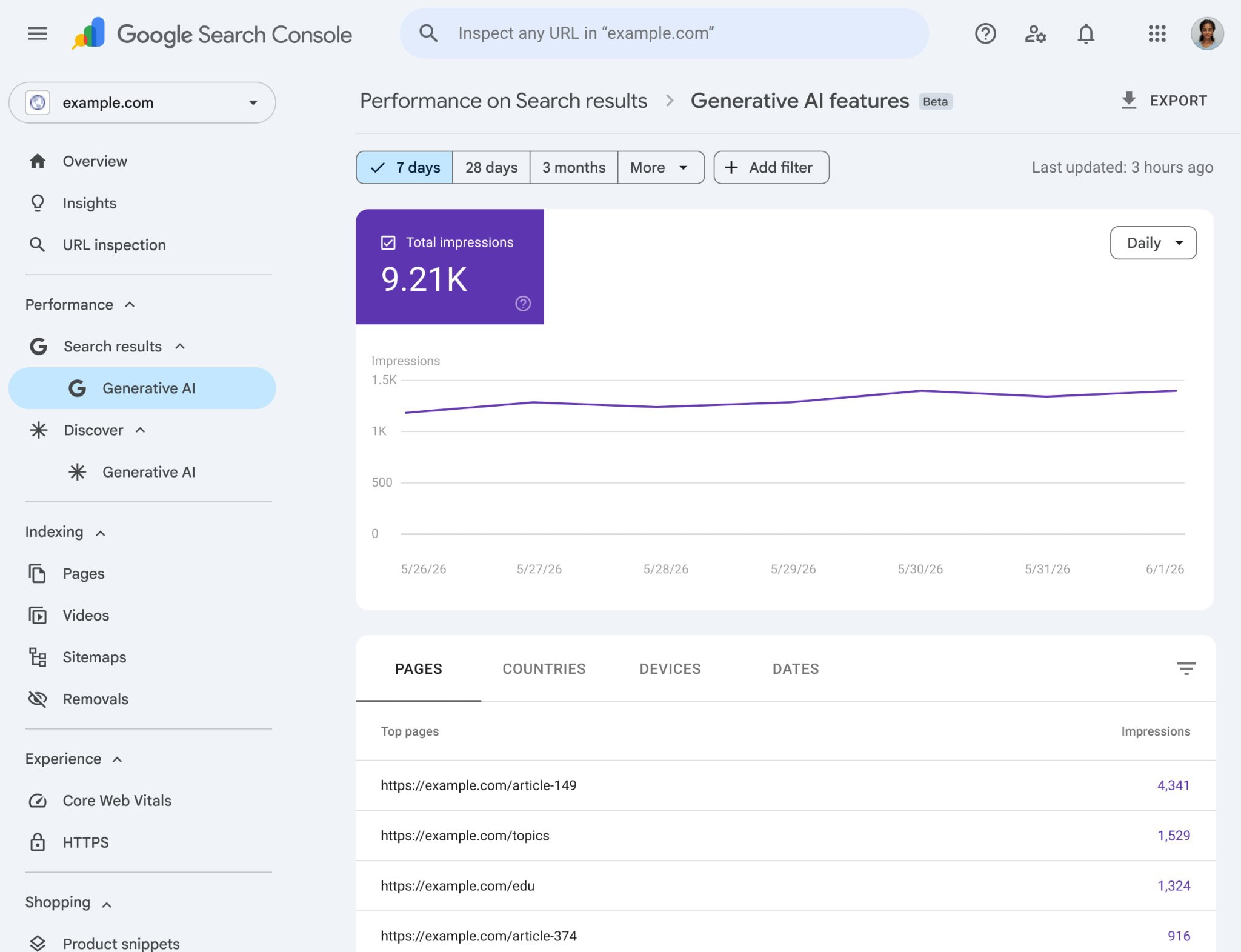
One of the most significant developments is that AI measurement is beginning to appear inside tools many businesses already use.
In June 2026, Google introduced dedicated generative AI performance reporting within Google Search Console. The reports provide website owners with information about impressions within Google’s generative AI search experiences, including AI Overviews and AI Mode, as well as generative AI features within Discover.
However, the new reporting isn’t available to everyone yet. Google is initially rolling it out to a subset of websites while testing the capability before making it more broadly available. Google also notes that a website may not see the report if it hasn’t received enough impressions within Google’s generative AI search features. So if you open Search Console today and don’t see dedicated AI visibility reporting, it doesn’t necessarily indicate a problem with your website.
In the meantime, marketers have developed other techniques for examining existing Search Console data for potential AI-related signals. Filters, for example, can isolate longer conversational queries or question-based searches that may provide additional insight into how search behavior is changing.
These techniques can be useful, but they also illustrate why AI visibility data requires interpretation. A ten-word conversational search query may resemble the way someone interacts with an AI search experience, but that doesn’t prove the query originated within one.
A proxy can provide a useful signal, but it shouldn’t be confused with confirmed AI activity. That distinction becomes increasingly important as businesses decide which AI visibility measurements deserve their attention.
Google Analytics Answers a Different Question
Google Analytics provides another important piece of the AI visibility picture, but it measures something fundamentally different from Search Console.
In May 2026, Google introduced a dedicated AI Assistant channel within GA4. This allows Google Analytics to automatically categorize traffic referred by recognized AI assistants such as ChatGPT, Gemini and Claude.
The distinction matters. Search Console can help us understand whether our content is appearing within Google’s AI-enhanced search environment. Google Analytics picks up the story when someone leaves an AI assistant and arrives at our website.
Once that visitor arrives, we can begin evaluating actual behavior. We can see which page attracted the visit, whether the person explored additional content, how engaged they were and whether they completed an action that matters to the business.
This moves the conversation beyond simply asking whether a company is visible in AI. It begins to tell us whether that visibility is generating website traffic and what those visitors do after they arrive.
Search Console and Google Analytics therefore provide complementary perspectives. One helps us understand visibility within Google’s evolving search environment, while the other helps us understand traffic and behavior originating from AI assistants.
Neither provides the complete AI visibility picture, but together they help connect AI visibility with something much more meaningful: the behavior of prospective customers.
Don’t Forget the Technical Foundation

AI visibility isn’t only about mentions, prompts and referral traffic. The website behind that visibility still matters.
Google PageSpeed Insights helps businesses evaluate the performance and user experience of their web pages across mobile and desktop devices. It combines real-world Chrome User Experience Report data with Lighthouse diagnostics covering performance, accessibility, best practices and SEO.
Google has also introduced an Agentic Browsing category within PageSpeed Insights. These checks are designed to evaluate whether websites are browsable by AI agents and can include WebMCP-related checks that help AI agents identify and interact with website tools and forms.
PageSpeed Insights still isn’t an AI visibility tracker. A strong Agentic Browsing result doesn’t mean ChatGPT, Gemini or another AI platform will recommend your company. But it demonstrates another dimension of AI readiness: whether the underlying website is technically prepared for AI agents to understand and interact with it.
AI visibility doesn’t replace the digital foundation businesses have spent years building. Your website still needs to be accessible, usable, technically sound and capable of delivering a strong experience for people while increasingly accommodating AI-driven interactions.
AI adds another layer to digital marketing. It doesn’t eliminate the importance of the layers underneath it.
“We’re reaching a point where measuring AI visibility isn’t the difficult part. The difficult part is deciding which measurements actually tell us something useful about the buyer.”
— Melih Oztalay, CEO, SmartFinds Marketing
Established SEO Platforms Are Evolving Too
The same transition is happening within platforms traditionally associated with search engine optimization. Moz Pro is a good example.
SEO platforms have historically helped marketers understand keywords, rankings, backlinks, domain authority, competitors and organic search performance. As AI becomes another way people discover and evaluate businesses, those platforms are expanding what they measure.
The question is no longer limited to where a company ranks in Google. Businesses increasingly want to understand how they appear when AI answers the question instead.
That creates a new set of measurements to consider, including:
- Whether the brand appears in AI-generated responses
- How frequently the brand is mentioned or cited
- Which sources AI platforms use when referencing the business
- Which topics and prompts generate brand visibility
- How the company’s AI visibility compares with competitors
- How that visibility changes over time
For businesses already using a platform such as Moz Pro, this raises an important practical consideration. Before purchasing another AI visibility tool, determine what information is already available within the marketing technology you’re paying for.
You may have more AI-related measurement capability than you realize.
GTmetrix Shows Us Something Different
GTmetrix provides an interesting example of where AI and digital marketing measurement may be heading next. In June 2026, GTmetrix introduced its MCP integration.
MCP, or Model Context Protocol, provides a standardized way for AI applications to interact with external tools and data sources. With the GTmetrix implementation, compatible AI tools can initiate website performance tests, retrieve reports, analyze metrics, compare historical results and recommend improvements.
This is different from the AI visibility measurements we’ve discussed so far. GTmetrix MCP isn’t primarily measuring whether your company appears in an AI-generated response. Instead, it demonstrates how AI is beginning to change the way marketers interact with the tools and data they already use.
Rather than logging into a platform, running a test, reviewing the results and deciding what to investigate next, a marketer can use an AI assistant to interact directly with GTmetrix. A request might include running performance tests across several landing pages, comparing the results with previous tests, identifying what has changed and prioritizing the issues that deserve attention.
GTmetrix MCP can work with compatible AI tools including ChatGPT, Claude, Codex, Cursor and GitHub Copilot CLI.
This points to a broader shift in AI Digital Visibility. AI isn’t only becoming something we measure. It is also becoming an operator and interface through which we access, interpret and act on marketing information.
The AI Visibility Industry Is Already Here
You don’t have to rely entirely on the marketing tools you already have. Search Google for “AI visibility tools” or “AI visibility services” and you’ll quickly see how rapidly an industry has formed around measuring and improving a company’s presence within AI environments.
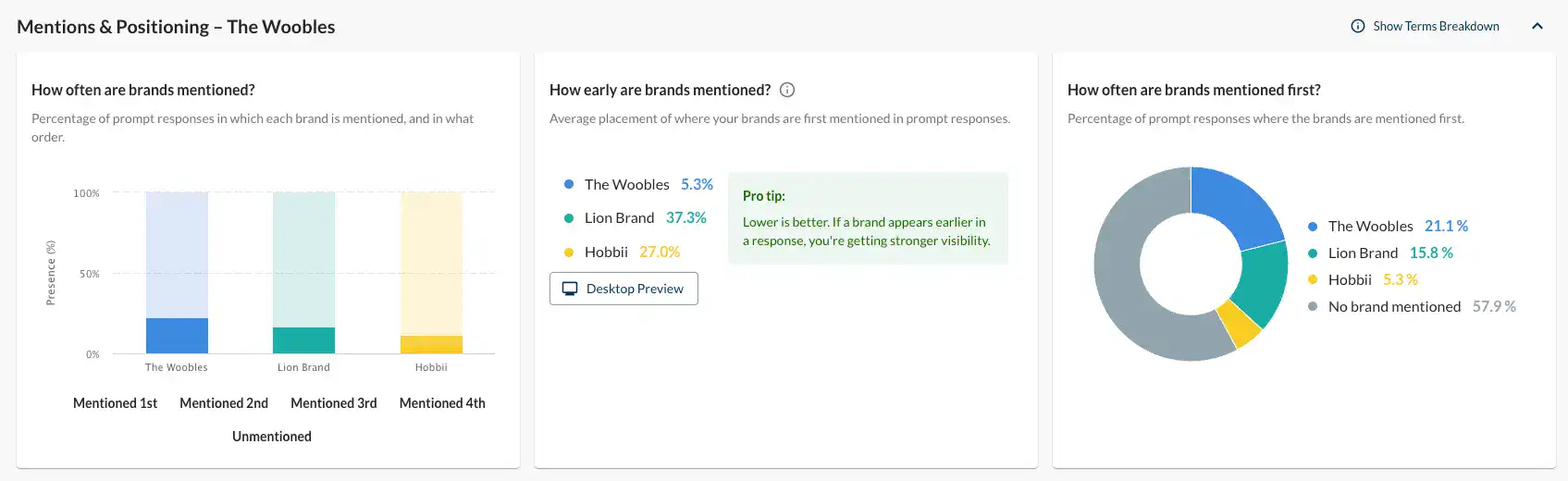
Dedicated platforms now track brands across ChatGPT, Gemini, Perplexity, Claude, Google AI Overviews and other AI experiences. Searchable is one example. Its platform monitors brand mentions and citations across AI engines, analyzes competitors, tracks prompts and identifies opportunities to improve AI visibility.
These additional capabilities come at a price. Searchable’s current plans, for example, range from $125 per month for its Pro plan to $400 per month for Scale and $999 per month for Enterprise, with increasing numbers of tracked prompts, audits and reporting capabilities.
Searchable is hardly alone. There are specialized AI visibility platforms, established SEO platforms adding AI capabilities, free AI visibility audits, agencies selling AI visibility services and consultants offering AEO and GEO programs.
These tools and services can provide capabilities that Google Analytics or Search Console cannot. Depending on the platform, they may monitor specific prompts across multiple AI engines, identify citations, compare your brand’s visibility with competitors and track changes over time.
For the right organization, those capabilities may absolutely justify the investment. But before adding another dashboard, subscription or service provider, there is a more fundamental question to answer: What are you actually trying to learn?
What AI Visibility Measurements Are Actually Helpful?
More data doesn’t automatically create more understanding. That’s especially true in a category evolving as quickly as AI visibility.
Rather than concentrating on one overall AI visibility score, businesses can organize the information they’re collecting around four increasingly important levels: presence, authority, engagement and business impact.
- Presence: Are you showing up?AI Presence starts with whether AI knows your company exists and associates it with the products, services, expertise and markets that matter to your business.When prospective customers ask questions related to the problems you solve, does your company appear? Is the information accurate? Are you visible for subjects that are commercially relevant to the business?Presence is the foundation. If your company is absent from the AI conversations that matter to your prospective customers, the other measurements become considerably less meaningful.
- Authority: Why are you showing up?Being mentioned isn’t the same as being trusted.Authority requires looking beyond whether your company appears and examining the context surrounding that visibility. How is the company being described? What sources are AI systems using when discussing it? Is your content being cited? Are credible third-party sources reinforcing your expertise? Are competitors being recommended in situations where your company should reasonably be considered?This is where visibility, credibility and authority begin working together. The objective isn’t simply to appear more frequently. It’s to become associated with the subjects for which your company genuinely deserves consideration.
- Engagement: What happens next?Engagement moves us from AI behavior to buyer behavior.When someone discovers your business through an AI platform and visits your website, we can begin measuring what that person does. Which content attracted the visitor? Did they explore additional pages? Did they investigate your products or services? Did they return later or take another meaningful action?This is where tools such as Google Analytics become particularly useful. AI visibility becomes much more meaningful when we can connect it with the behavior of actual prospective customers.
- Business Impact: Does any of this create opportunity?Ultimately, executives don’t invest in AI visibility because they want another dashboard. They want the right prospective customers to discover, understand, trust and consider their company.That means the measurement progression eventually needs to connect visibility to engagement, conversations, opportunities, pipeline and revenue.Attribution won’t always be neat. A buyer might discover your company through ChatGPT, read an article, search for your company on Google, visit your LinkedIn profile, return directly to your website two weeks later and finally schedule a conversation.Trying to assign all the credit to one channel misses how the modern buying journey works. The more useful objective is understanding whether AI visibility is contributing to the series of interactions that eventually creates a business opportunity.
Don’t Optimize for the Score. Optimize for the Buyer.
AI visibility is becoming easier to measure, but more data doesn’t necessarily provide a clearer answer. Google Analytics, Search Console, Moz and specialized AI visibility platforms each tell us something different about how a business is being discovered, represented and engaged with across the AI ecosystem.
The key is knowing what those measurements mean and how they fit together.
Start with presence. Determine whether your company is showing up where it should. Then look at authority and whether AI is presenting your business accurately and credibly. From there, measure engagement and what prospective customers do after discovering you. Finally, connect those activities as closely as possible to business opportunities and revenue.
AI visibility scores, rankings and benchmarks can help identify progress, but they shouldn’t become the objective.
The real measure of AI visibility is whether the right buyers can discover your company, understand what you do, trust what they find and consider doing business with you.
That’s when AI visibility becomes more than another marketing metric. It becomes part of the AI buying journey.
“AI visibility only becomes valuable when it helps the right buyer discover your business, understand why you’re relevant and take the next step.”
— Melih Oztalay, CEO, SmartFinds Marketing
Put Your AI Visibility to the Test
Before investing in another AI visibility platform or worrying about your visibility score, conduct a simple exercise using the tools and information you already have.
Start with three to five questions a prospective customer might ask when researching a problem your company solves. Don’t use your company name in the questions. Ask them naturally, the same way a buyer who doesn’t already know you might.
Run those questions through several AI platforms such as ChatGPT, Gemini, Perplexity or Google AI Mode. Then review what you find using four questions:
- Presence: Does your company appear in any of the responses? If not, which competitors do?
- Authority: If your company appears, how is it described? Is the information accurate? Is your company being cited or recommended, and what sources are supporting the response?
- Engagement: Check Google Analytics and Search Console for the AI-related traffic and visibility information available to you. Are people reaching your website through AI assistants, and what do they do when they arrive?
- Business Impact: Look beyond the AI visibility numbers. Are any of these interactions contributing to inquiries, conversations, opportunities or other actions that matter to the business?
Document what you find and repeat the exercise periodically. You now have a simple baseline against which you can measure change.
You may discover that you need a specialized AI visibility platform to answer questions your existing tools cannot. You may also discover that you already have enough information to identify where improvements should begin.
Either outcome is useful.
The goal isn’t to collect another score. It’s to understand how your business appears during the AI-assisted buying journey—and where you have an opportunity to become more visible, credible and useful to the buyers you want to reach.
Continue the AI Marketing Series
The AI buying journey is increasingly happening before traditional marketing analytics can see it. The previous article explores how businesses are evaluated, trusted, and chosen within that changing journey. The next step is determining which signals actually tell us whether an organization is visible to AI—and whether that visibility is producing meaningful business impact.
Previous: The AI Buying Journey: How Businesses Are Evaluated, Trusted, and Chosen
Next: AI Business Recommendations: Being Found by AI Isn’t Enough
Have a marketing challenge worth talking through? Start a conversation with SmartFinds.